


Quality and Sample Inspections at Europress

How do we ensure the quality of our products? We conduct regular sample inspections of the internal condition of materials and the precision of machining processes. Ongoing quality control activities—both internal and external—are essential to guarantee hydraulic sealing and the proper functioning of the final product. During sample inspections, we verify compliance with design specifications, dimensional tolerances, and surface roughness to prevent short- and long-term defects. The image clearly illustrates our inspection process: in this case, it shows a pump body cut along its central axis and internally examined by our technical department. (photo – sectioned pump head) To ensure that the production line is free from critical issues, sample inspections are conducted in accordance with our dedicated internal operating procedure, which is monitored and validated under ISO 9001 standards (Europress is ISO 9001 certified). For the newly released products, the inspection frequency is significantly higher and includes various types of testing. When necessary, we sacrifice finished components—such as the pump body—where critical boreholes cannot be thoroughly analyzed from the outside.
Hydraulic cylinders
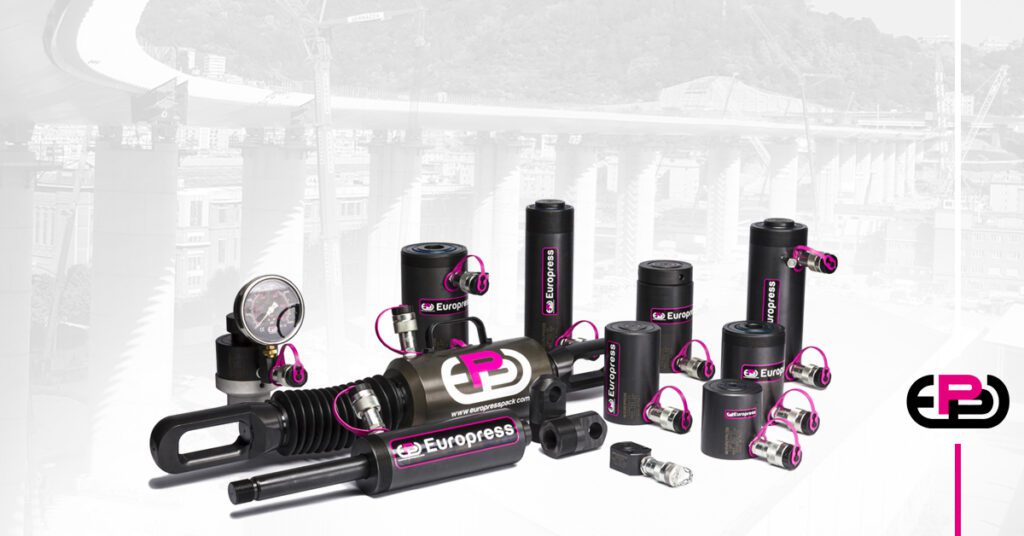
Our history speaks for itself: we started by producing hydraulic cylinders, and still today they are the products that make us stand out worldwide. Our 700 bar hydraulic cylinders combine materials selected from certified suppliers with full traceability and advanced treatments, ensuring high safety standards even under the toughest conditions: no welding, high-performance seals, extremely reliable nitrided tilt saddles, and the ability to absorb eccentric/lateral loads up to 8% of their capacity. Every day we work to deliver quality products and fast responses. Our production system is certified ISO 9001 and ISO 14001. Each component is thoroughly inspected, and most of our models are designed in compliance with ANSI B30.1 standards. We are flexible and attentive to our customers’ needs. We efficiently manage both large and small batches, including specific custom requests. Our delivery times rank among the best in the industry. And we never stop improving: Industry 4.0 facilities, laser marking for end-to-end traceability, advanced surface treatments, and corrosion resistance guaranteed by the Nitreg ONC process. Europress hydraulic cylinders: from tradition to everyday industrial performance.
Vertical pile load test

The vertical pile load test (static load test) is used to determine the bearing capacity and deformation behavior of a foundation pile in situ. It is considered the most reliable method to validate project design assumptions. The test is performed on a pile identical to those used in the project. The pile is either left protruding from the ground or connected to a concrete test head, and a high-pressure hydraulic cylinder is placed on top. The piston of the cylinder pushes against a reaction system: either steel beams connected to reaction piles, or a reaction frame resting on the ground. The cylinder applies increasing loads to the pile. After each increment, the settlement is recorded, and the load is maintained for a predetermined time until the settlement stabilizes. At the end of the test, the pile is gradually unloaded and the elastic rebound is measured. The test provides the pile load–settlement curve: in the first part, the response is nearly elastic (with limited settlements), followed by more pronounced plastic deformations until the ultimate capacity of the pile is reached (rapid settlements).
Pile test
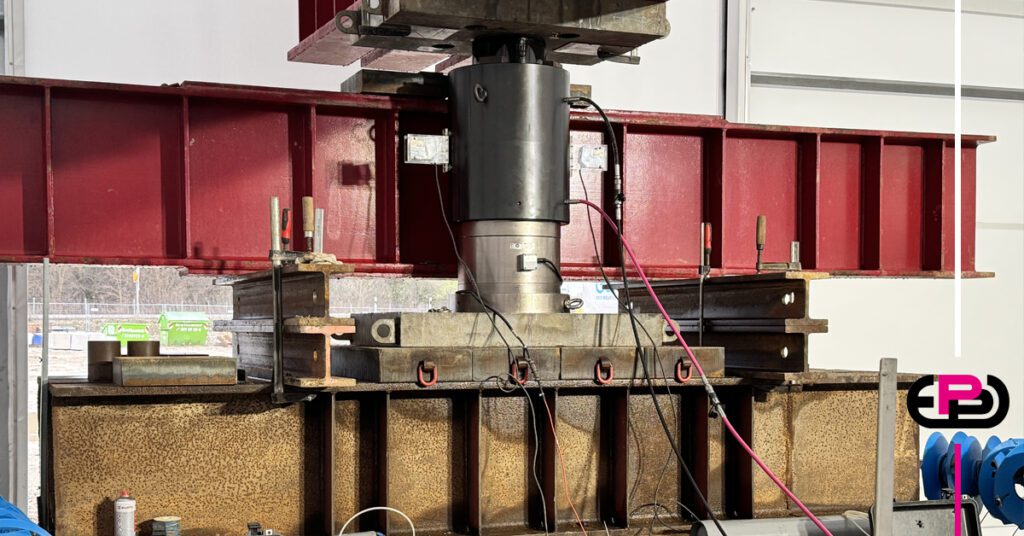
The static load test is a test in which a program-controlled force is applied to a foundation pile. With this test, a force is applied to the pile, and at the same time the ground pile shiftment is measured. The load is applied in a controlled manner, typically in several stages up to 150–200% of the design safe load. This method is very accurate and is often used to determine the maximum load capacity and the residual settlement of the pile. The force is generated by means of hydraulic cylinders and applied with a reaction frame made of steel beams and several reaction piles. The collected data are analyzed to establish the pile’s load-deflection relationship and determine its ultimate capacity and performance. In a pile testing system, there are several hydraulic components. Hydraulic cylinders are the core components that apply the force. Europress offers various series, such as the double-acting, high-capacity COS cylinders for large axial loads. Self-leveling heads (ZTT series) are available. Hydraulic pumps are used to pressurize the hydraulic cylinders. Europress offers a wide range of pumps, like manual pumps, electric pumps, or units powered by internal combustion engines. Connection hoses & couplings: SN-series flexible hoses with K-series quick-release couplings connect the pump to the cylinders. In addition, pressure gauges or load cells are essential for measuring the applied load and monitoring the test progress; they can be analog or digital and are calibrated for accuracy. Finally, displacement gauges measure the deflection that occurs during the test. In the photos you can see the static load test carried out on the BAB A7 “Mainbrücke Marktbreit” highway bridge (maximum load: 36,000 kN). The hydraulic system consists of one or more Europress double-acting hydraulic cylinders, COS series, with 800-ton capacity and electronically controlled constant pressure up to 700 bar. The applied force is measured by calibrated load cells positioned beneath the cylinders.
D’Amico constructions sites
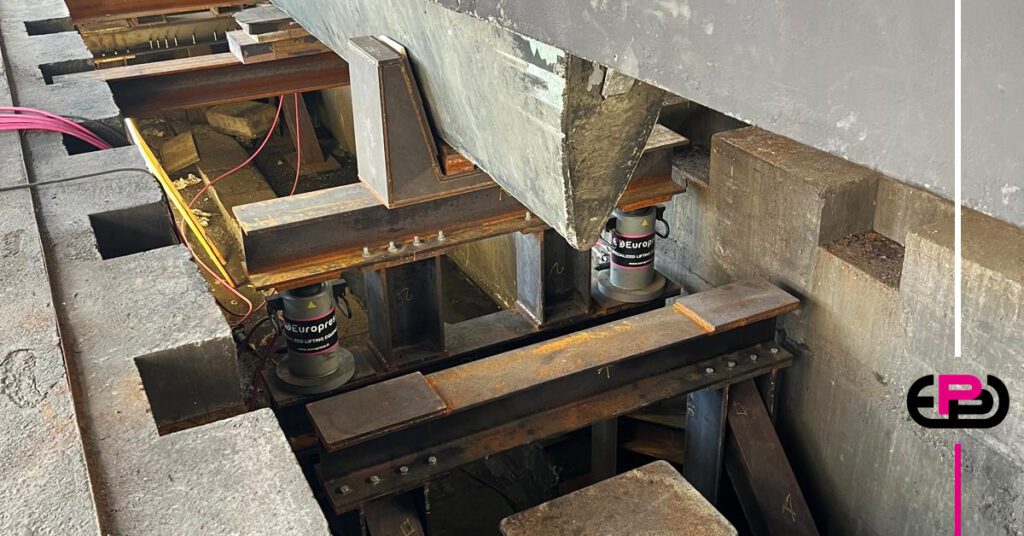
The retractable keel is a device used on megayachts and other high-performance vessels to reduce draft while navigating in shallow waters, without compromising stability and performance on the open sea. One such keel, weighing over 60 tons, was the subject of a maintenance operation on a mega yacht with an aluminum hull and an overall displacement of 500 long tons. For this task, four lightweight alloy double-stage telescopic cylinders from the COL#D series were used. The operation was meticulously planned well in advance and required dedicated equipment due to limited access beneath the hull. The compact design of the COL#D cylinders, their generous support base, and integrated handling grips allowed for precise and efficient positioning even in extremely tight spaces. Powered by a hydraulic power unit equipped with flow dividers, the cylinders lifted the keel and enabled the removal of the pivot pin at the joint. The integrated counterbalance valves ensured a controlled descent to the ground, where the guide bushings were replaced and the control hydraulic cylinder underwent maintenance. The subsequent lifting and repositioning of the keel were carried out with the same precision, allowing the pivot pin to be properly reinserted into its housing. At the end of the operations, the megayacht was able to return to the sea in full safety. The COL#D series telescopic cylinders, traditionally used in the railway sector for the re-railing of rail vehicles represent an extremely effective technical solution in all contexts where a long stroke is required but available space does not permit the usage of single-extension jacks.
H13 HEPA filters

We have recently completed the installation of H13 HEPA filters on all our production machinery. This is not a legal requirement (current regulations in the Liguria Region do not mandate this level of filtration), but a choice we have made: investing in the health and well-being of our workers, as well as in environmental protection, is an absolute priority for us. HEPA (High Efficiency Particulate Air) filters are high-efficiency filters designed to capture microscopic airborne particles. The H13 class represents one of the highest levels of filtration according to the European standard EN 1822. H13 HEPA filters capture at least 99.95% of particles as small as 0.3 microns, which is the most difficult particle size to filter. These include fine dust (PM2.5 and PM10), pollen, allergens, bacteria, viruses, mold spores, and other ultrafine particles. With the H13 HEPA filters, we have almost eliminated smoke emissions into the atmosphere, removed unpleasant odors, improved protection against pollutants, and significantly reduced the presence of allergens and dust. This results in a healthier and safer work environment, with clear benefits for respiratory health. We believe that taking care of the planet and people is a responsibility to be embraced every day through concrete and sustainable actions.
Ferragosto

Ferragosto is the heart of the Italian summer: once a sacred moment of pause for millions of workers. In many Italian factories, it was tradition to close for Ferragosto, giving workers a collective break to recharge and enjoy the summer holidays. A ritual that speaks to the value of work, but also of rest and family—a cultural heritage still celebrated today in many homes and communities. We wish you a pleasant summer break and look forward to coming back refreshed and ready for new challenges.
Underground pipe lifting
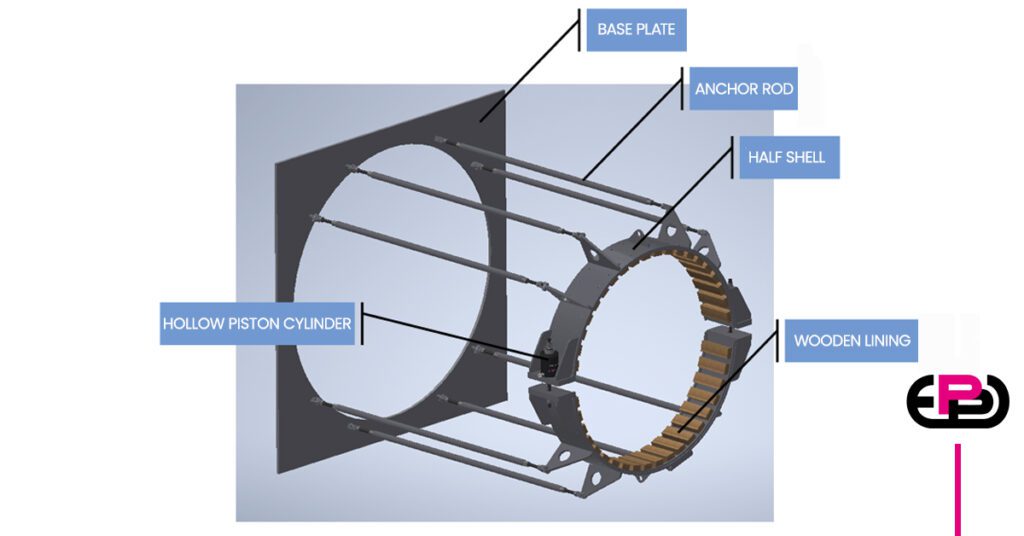
In the field of underground infrastructure, it is often necessary to ensure the stability and proper alignment of concrete pipes during installation or extraction operations. In these scenarios, a mechanical retention system based on CMF-series hydraulic cylinders is employed. The system consists of a couple of half rings internally lined with hardwood, functioning as a friction surface and positioned around the pipe to be restrained. The half rings are pressed against the pipe’s surface by CMF-series hollow hydraulic cylinders, specifically selected for their capacity to exert force in narrow spaces. In this configuration, the steel plate to which the cylinders are mounted is fastened to the steel lining of the excavation shaft, absorbing the tensile forces transmitted by the anchoring rods. This system ensures a secure and temporary anchoring of the pipe segments during the jacking phase, as demonstrated in the video. Europress’s CMF cylinders can operate both in tension and compression, thanks to the possibility of inserting rods or cables through the plunger’s central hole. They are particularly suitable for pretensioning of tensile structures, mounting and extraction of pulleys, bushings, and heat exchanger tubes. CMF cylinders, available in both steel and lightweight alloy versions, offer push forces ranging from 10 to 100 tons, with strokes varying from 8 to 150 mm. Their metric-threaded body and base mounting holes simplify integration into metal containment structures.
When aluminum is not an option, steel is the answer

In certain explosion-risk areas (ATEX), anti-deflagration regulations prohibit the use of aluminum, due to the potential risk of ignition caused by friction with other surfaces. To meet these safety requirements, Europress Epp has developed a special version of our pumps made entirely of steel, while maintaining the same performance as our standard lightweight alloy models. These pumps are widely used in the mining industry, but they are also well suited for other environments where spark-free operation is critical, such as: Chemical and petrochemical industries Paint and coating plants Pharmaceutical manufacturing Refineries and natural gas plants Hazardous waste treatment facilities Our technical department is available to support you with customized ATEX solutions, tailored to your specific application and safety requirements.
Record-breaking times on a motorway construction site

The Europress COF series hollow cylinders with integrated counterbalance valve played a key role in the construction of this dual carriageway bridge by enabling the safe positioning of special lattice girders. Due to the unstable ground conditions in the central span, a traditional stationary support was not a viable option. Thanks to these hydraulic tools, the construction time for both load-bearing structures was reduced to just 70 days. Reliability, expertise, and technical support: when these elements make the difference, Europress cylinders are the right solution. Whether it’s a complex application or a specific requirement, having a partner that provides both high-quality products and professional support is essential. With Europress, you’re not just buying a cylinder: you’re choosing tailored, fast, and effective technical assistance.