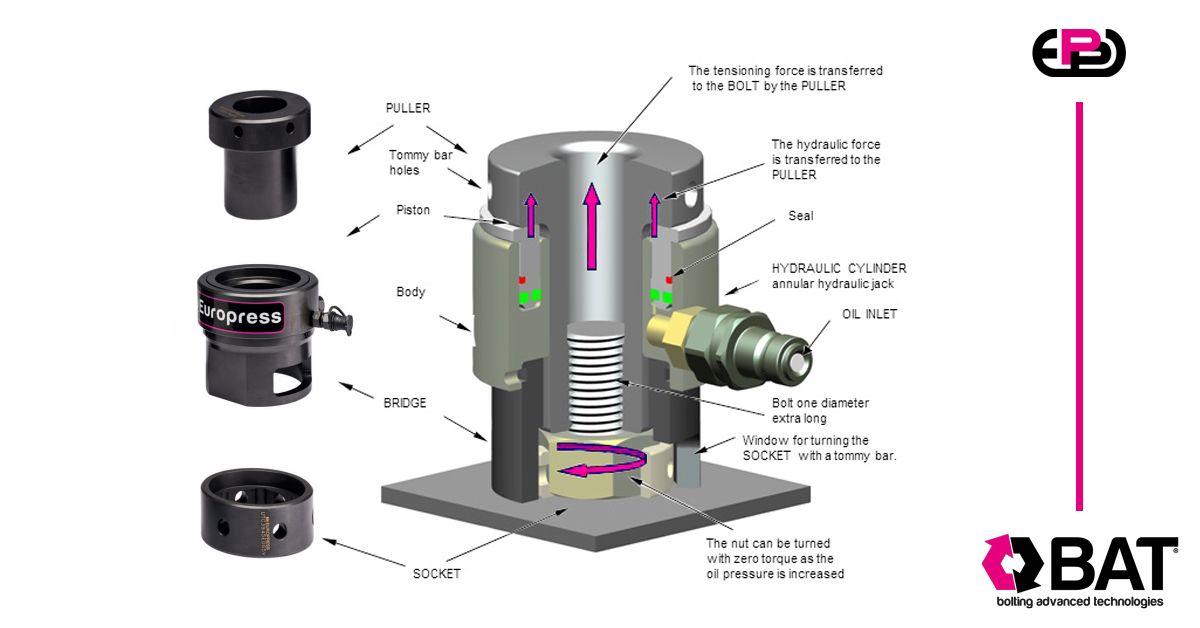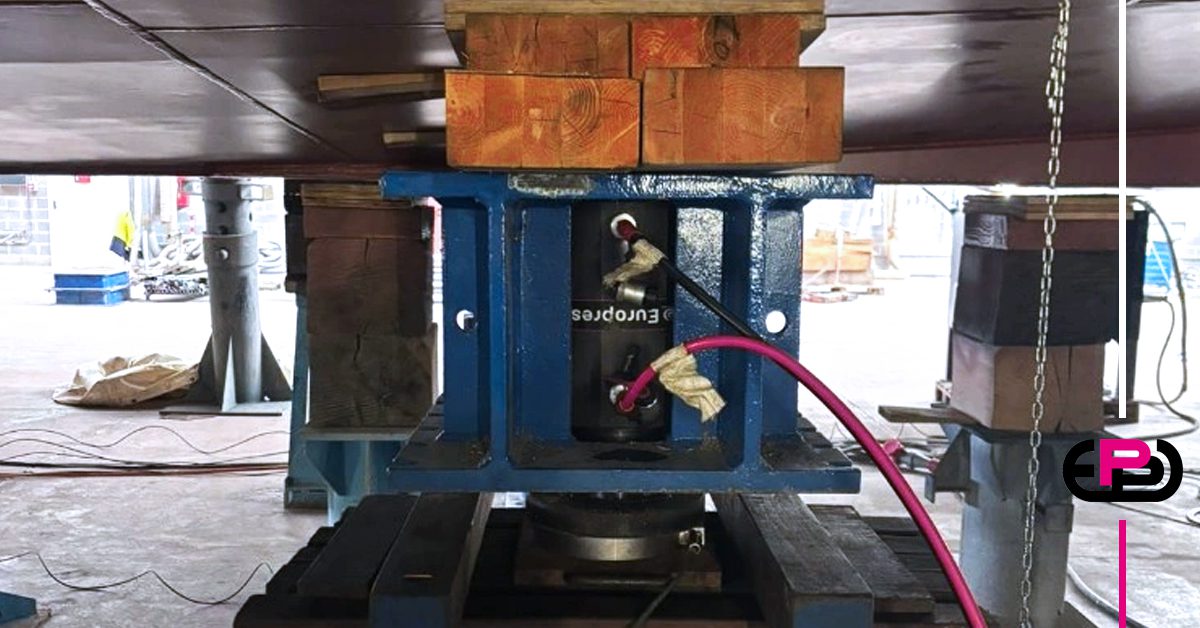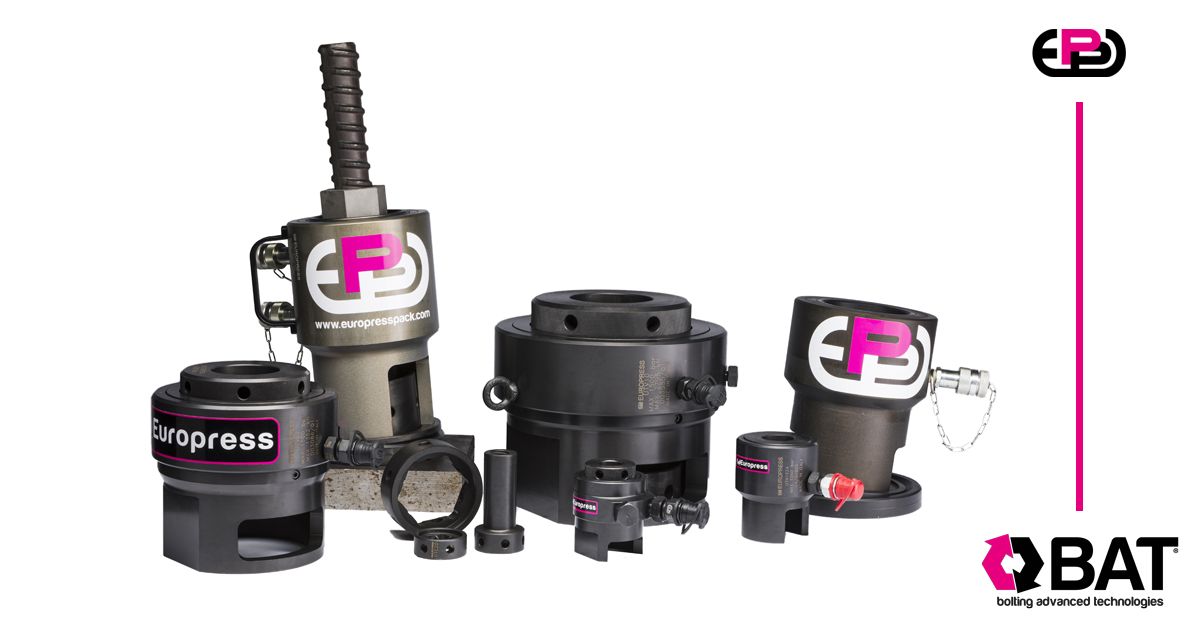
Hydraulic bolt tensioning is a technique used when a highly accurate and uniform preload is required in bolted joints, particularly in flanges or other critical structures.
Unlike traditional tightening methods—such as torque wrenches or hydraulic torque tools—which apply a torque to achieve the desired preload, hydraulic tensioning works by applying a direct axial force to the bolt or stud using a high-pressure hydraulic tensioner, typically operating up to 1,500 bar.
This method is widely used in industries where reliability and precise load control are essential, such as petrochemical plants, turbines and generators, pipeline flanges, offshore structures, and large heat exchangers.
The main advantage of hydraulic tensioning is that the resulting preload depends directly on the applied hydraulic pressure. This eliminates the high level of uncertainty associated with friction—both under the bolt head and in the threads—which affects all torque-controlled tightening methods. Such uncertainty tends to translate almost linearly into variations in the achieved preload.
As a result, tightening errors are significantly reduced, and a much more uniform preload can be achieved across all bolts.